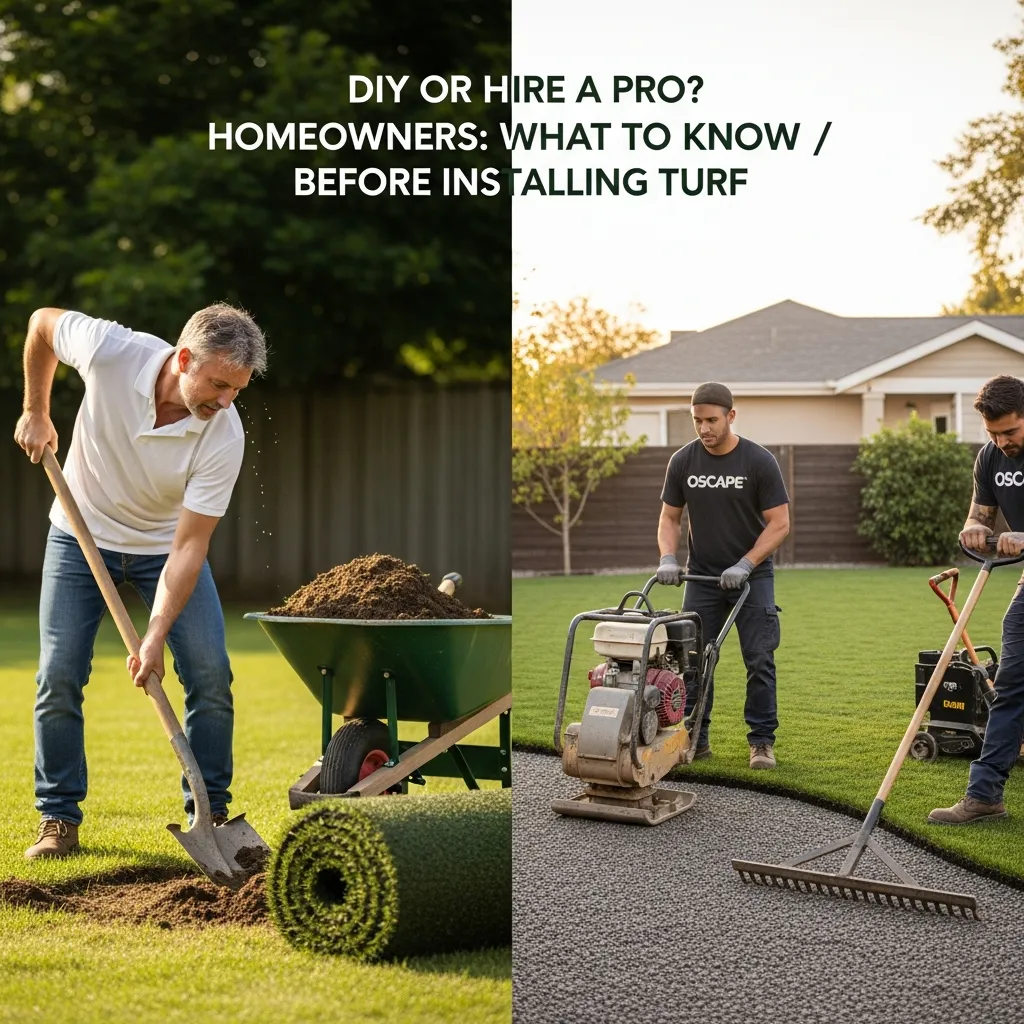
Should I Install Artificial Turf Myself?
If you're considering artificial turf for your home, you've probably asked yourself one important question: Should I install artificial turf myself, or hire a professional?
If you're still researching, you may also want to learn how much artificial turf costs before deciding whether a DIY installation is worth the savings.
The answer depends on the size of your project, your experience, and whether you're prepared for the physical labor involved. As a professional artificial turf installer serving Orlando homeowners, I've seen both successful DIY projects and homeowners who called us after realizing they were in over their heads.
Here's my honest opinion based on real-world experience.
The Biggest Misconception About DIY Artificial Turf Installation
The biggest misconception homeowners have is thinking artificial turf installation is simply rolling out fake grass.
In reality, the preparation work is what determines whether your turf lasts 15 to 25 years or starts developing problems within a few seasons.
I once worked with a homeowner who planned to install the turf themselves. They made it halfway through the project before calling us. The biggest surprise wasn't installing the turf—it was the excavation.
Most installations require removing the existing grass along with a minimum of four inches of soil. After that, the excavated area has to be replaced with a properly compacted drainage aggregate. Between the digging, hauling soil away, and bringing in several tons of stone, they quickly realized the project was much larger than expected.
What a Professional Artificial Turf Installation Actually Involves
A professional installation follows a proven process designed to maximize drainage, durability, and appearance.
Remove Existing Grass and Soil
The first step is removing all existing vegetation along with at least four inches of soil to create room for the new base.
Install Weed Barrier Fabric
Next, we install a non-woven 3-ounce weed barrier fabric. This is one of the most overlooked components in DIY projects, but it's critical for reducing future weed growth while still allowing proper drainage.
Build the Base
We install #57 crushed drainage aggregate and carefully grade it according to the property's slope. Proper grading helps water move away from the turf instead of pooling underneath it.
The aggregate is then compacted to create a stable foundation.
Install the Turf
Only after the base is complete do we install the turf itself.
Many homeowners don't realize that a single roll of artificial turf can weigh 500 pounds or more. Moving and positioning those rolls safely often requires multiple people and specialized equipment.
The Most Common DIY Mistakes I See
Over the years, I've noticed several mistakes that repeatedly cause problems.
Skipping the Proper Weed Barrier
Many homeowners either skip the weed barrier entirely or install the wrong material. I recommend a non-woven 3-ounce fabric between the sub-base and the drainage aggregate.
Turf Grain Facing Different Directions
Artificial turf has a grain, often called the pile direction.
Installing sections with the pile facing different directions causes noticeable color variations across the lawn. For the most natural appearance, I recommend laying the turf so the pile faces toward the house.
Visible Seams
Joining multiple pieces together is one of the most difficult parts of an installation.
Without experience, seams often become visible over time, making the lawn look patchy instead of seamless.
Not Installing Enough Infill
Proper infill helps support the turf fibers, improves durability, and extends the life of the installation.
Many DIY projects simply don't use enough, which causes the blades to flatten prematurely and reduces the overall performance of the turf.
When Does DIY Make Sense?
I'll be honest—there are situations where installing artificial turf yourself can make sense.
If your project is 100 square feet or less, it's often manageable for a homeowner.
Projects this size usually:
Require little or no seaming
Use a turf roll that one or two people can comfortably handle
Are less physically demanding
Present fewer opportunities for costly mistakes
If you're handy, have the necessary tools, and don't mind the labor, a small installation can be a rewarding weekend project.
When You Should Hire a Professional
Once your project exceeds about 100 square feet, the difficulty increases significantly.
Larger projects typically involve:
Multiple seams that must be nearly invisible
Much heavier turf rolls
More excavation
Larger amounts of drainage aggregate
More precise grading
Better drainage design, especially for homes with pets
Pet turf systems require even more attention because proper drainage is essential for controlling odors and maintaining a clean surface.
These are the projects where professional experience makes a significant difference.
Is Hiring a Professional Worth It?
When homeowners ask why they should hire OScape instead of installing artificial turf themselves, I usually ask them one question:
What's more important—having your project professionally completed in two to three days, or spending the next four weekends trying to achieve professional results?
If you don't have the experience, specialized tools, or time required, hiring a professional often saves frustration, prevents expensive mistakes, and gives you confidence the installation was done correctly the first time.
A properly installed artificial turf lawn is a long-term investment that should last 15 to 25 years with proper care.
Considering how long you'll live with the results, getting the foundation right is one of the smartest investments you can make.
If you're still weighing your options, take a look at our comparison of artificial turf vs. natural grass to see which solution best fits your lifestyle, maintenance expectations, and budget.
Final Thoughts
DIY artificial turf installation isn't impossible—but it's much more demanding than most homeowners expect.
If your project is small and straightforward, tackling it yourself may be worthwhile.
However, for larger lawns, projects requiring multiple seams, or pet-friendly installations, professional installation provides better drainage, a more natural appearance, and a finished product that's built to last for decades.
If you're unsure which option is right for your property, we're always happy to provide honest advice and a free estimate. Sometimes knowing what the project truly involves is enough to help you make the right decision.
